
Important minerals for kids
For physical and mental development. our children depend on valuable minerals for their
Since the human body cannot produce the essential micronutrients itself, they must be obtained in sufficient quantities from food.
- what nutrition science means by mineral nutrients
- why our bodies need them
- which minerals especially for children are important
What everything is classified as a mineral nutrient?
Fats, proteins, and carbohydrates are the main nutrients for our bodies. They consist of the chemical elements carbon, oxygen, hydrogen, and nitrogen.
In addition, the body needs various substances that nutritionists collectively refer to as minerals or mineral nutrients.
Minerals are divided into two categories: major minerals and trace elements.1 The difference lies in the amount found in the human body.
If a mineral is present at a concentration of more than 50 milligrams per kilogram of body weight, science classifies it as a major mineral. This group includes calcium, magnesium, phosphorus, potassium, sodium, sulfur, and chlorine.
Substances such as iron, copper, chromium, zinc, cobalt, manganese, fluoride, selenium, iodine, molybdenum, vanadium, and nickel, which are found in the body only in small amounts, are known as trace elements.
What is the difference between minerals and vitamins?
Vitamins and minerals are important building blocks of life that we must obtain through our diet. They provide no energy, but are indispensable for the smooth functioning of processes in the body.
Put simply, vitamins are organic compounds, whereas minerals are inorganic substances. Chemists use the term “organic” to describe molecules made up of hydrocarbon compounds.2
Inorganic substances, on the other hand, contain no carbon—with a few exceptions.3 The minerals that are important to us are usually found in food in the form of salts (positively and negatively charged ions).
Another difference between vitamins and minerals lies in their sensitivity to heat: While many vitamins are destroyed by prolonged cooking, high temperatures have no effect whatsoever on minerals.
Why we urgently need minerals
Unlike vitamins, minerals have simple chemical structures. A 2020 review points to its diverse roles in humans refer to the organism:4
According to this publication, minerals
- important for regulating oxygen in the body,
- play a crucial role in cellular energy production,
- are crucial for the structure and function of brain cells.
If we do not obtain enough minerals through our diet, a deficiency develops over time. As a result according to the cited scientific paper, cognitive and psychological symptoms as well as fatigue may occur.
Which minerals are particularly important for children?
As the body is constantly gaining weight, our youngest children have a high need for valuable minerals.
Calcium
Calcium is needed to maintain normal bones and teeth. According to the German Endocrinological Care Center (DEVZ), the body needs sufficient amounts of vitamin D to absorb calcium from the intestines and incorporate it into the bones.5
As a current study from China demonstrates, the combination of vitamin D and vitamin K2 has an even more favorable effect on bone metabolism. As part of a meta-analysis, researchers at Qingdao University evaluated eight randomized controlled trials from scientific databases (Web of Science, PubMed, Embase, Cochrane Library).
They reached the following conclusion: “Vitamin K in combination with vitamin D can significantly increase bone density, with an even stronger effect expected when vitamin K2 is used.”6

Foods containing calcium
- Emmental – 1050 mg
- Gouda – 810 mg
- Sesame (fresh) – 738 mg
- Soybeans – 201 mg
- Kale – 196.5 mg
- Spinach – 121 mg
- Whole milk – 120 mg
- Kefir – 120 mg
- Yogurt – 120 mg
Calcium content per 100 grams of food6
A child aged 4 to under 7 years needs 750 milligrams of calcium per day. A large glass of milk (250 ml), a whole-grain roll with two slices of Gouda (50 grams), and a yogurt (100 grams) for breakfast provide enough calcium for the entire day.
Iron
According to a 2019 Chinese study, iron is one of the essential trace elements. Since an excess is toxic, the transport, metabolism, and storage of this valuable mineral are strictly regulated.8
What functions does iron perform in the human body? Above all, it contributes to normal oxygen transport in the body. In addition, iron has a role in cell division and contributes to the normal function of the immune system.
Foods containing iron
- Pork liver – 18 mg
- Millet – 9 mg
- Lentils – 7.5 mg
- Chickpeas – 6.9 mg
- Soybeans – 6.6 mg
- Lima beans – 6.3 mg
- Peas – 5.2 mg
- Rolled oats – 4.6 mg
- Pork tenderloin – 3.0 mg
- Beef tenderloin – 2.3 mg
Iron content per 100 grams of food8
Iron for children is particularly important during the growth years: the daily iron requirement for children under 10 is 8 to 10 milligrams. With a meal consisting of 100 grams of pork liver, 50 grams of brown rice, and 50 grams of peas, a child aged 7 to 9 takes in the amount of iron needed for two days.
Magnesium
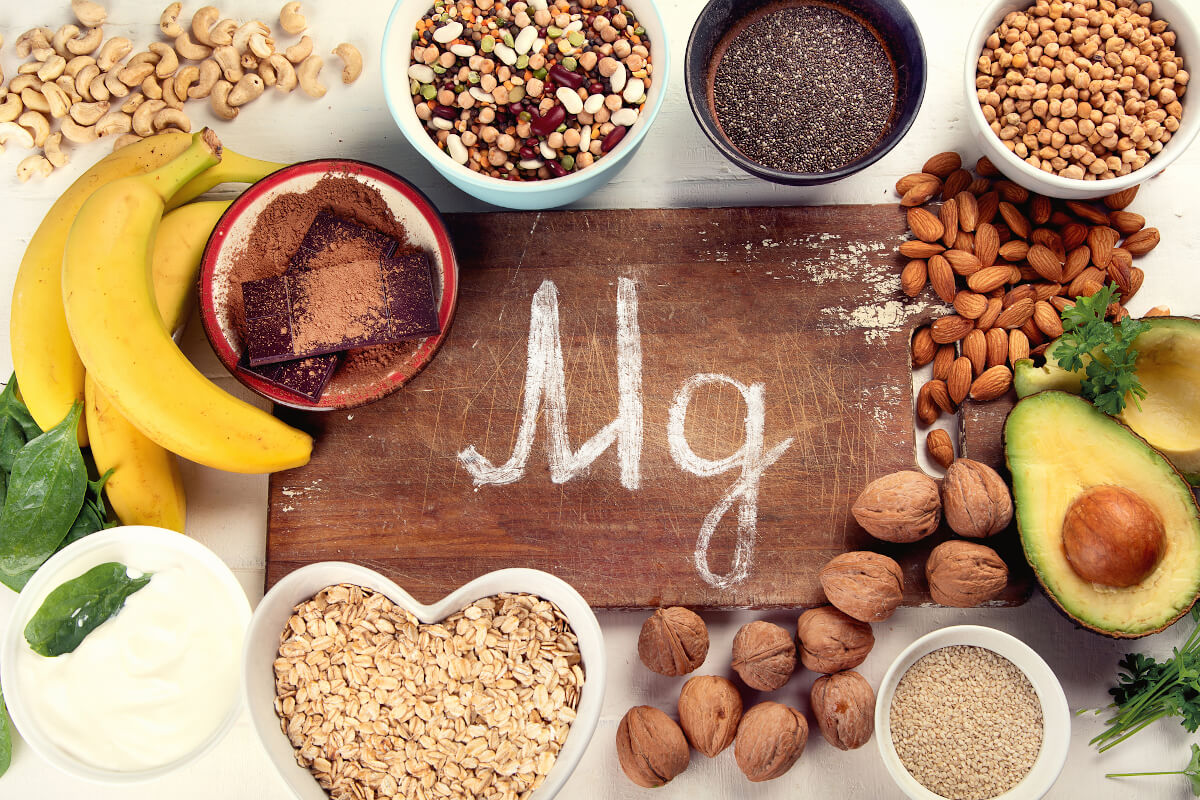
Magnesium for children is particularly important during the growth phase, as larger amounts are needed during this period. The mineral has a role in cell division and contributes to the maintenance of normal bones and teeth and normal muscle function. Furthermore, magnesium contributes to electrolyte balance and normal nervous system function.
Foods containing magnesium
- Wheat bran – 590 mg
- Soybeans – 220 mg
- Lima beans – 204 mg
- Millet – 170 mg
- Brown rice – 157 mg
- Rolled oats – 137 mg
Magnesium content per 100 grams of food10
The daily requirement for children between 4 and 6 years of age is 120 milligrams of magnesium. A cereal containing 100 grams of rolled oats or any lunch consisting of 80 grams of brown rice is sufficient to ensure an adequate magnesium supply for the entire day.
Zinc
According to Professor Dr. M. Leigh Ackland and Dr. Agnes Michalczyk from Deakin University in Melbourne, zinc is essential for a wide range of processes in all cells. It is a critical nutrient, particularly during the first years of life. The Australian scientists point out that zinc deficiency can impair immune function and contribute to the global burden of infectious diseases such as diarrhea, pneumonia, and malaria contributes.11
Zinc has a role in cell division and contributes to the maintenance of normal bones, nails, hair, and skin contributes. Furthermore the mineral contributes to normal acid-base metabolism, carbohydrate metabolism, fatty acid metabolism, and normal protein synthesis.

Foods containing zinc
- Pork liver – 6.35 mg
- Emmental – 4.63 mg
- Beef – 4.41 mg
- Soybeans – 4.18 mg
- Rolled oats – 4.06 mg
- Brazil nuts – 4.0 mg
- Gouda – 3.9 mg
- Peanuts – 3.07 mg
Zinc content per 100 grams of food12
A meal consisting of 100 grams of beef and a handful of peanuts or Brazil nuts in the afternoon is already enough to meet the daily zinc requirement of a 7- to 9-year-old child.
Iodine
The trace element iodine is an important component of the thyroid hormones triiodothyronine and tetraiodothyronine (thyroxine). Under the title Nothing Works Without Iodine, the Professional Association of Paediatricians and Adolescent Doctors points out the following: “The trace element iodine influences important processes in the body – among other things, it plays a crucial role in physical and mental development.
The most severe form of iodine deficiency during pregnancy can cause growth disorders and delayed mental development (cretinism) in the unborn child. Studies from the USA show that children of mothers with hypothyroidism during pregnancy had IQ scores that were 4 points lower.”.13
Foods containing iodine
- Hijiki (brown algae) – 500 µg
- Haddock – 243 µg
- Sea lettuce (green algae) – 240 µg
- Breaded fish fingers – 175 µg
- Cod – 155 µg
- Shrimp – 130 µg
- Redfish – 104.5 µg
- Kipper – 72 µg
- Tuna – 50 µg
Iodine content per 100 grams of food14, 15
Children aged 4 to under 7 require a minimum daily intake of 120 micrograms of iodine. With 80 grams of cod or three fish fingers, children consume a sufficient amount of this valuable trace element.
Selenium
Selenium levels play a role in the development of children's cognitive abilities. This is the conclusion reached by scientists at the renowned Karolinska Institute (Karolinska Institutet) in Stockholm. As part of a longitudinal cohort study, they examined the selenium status of a total of 1,408 children up to the age of ten. During pregnancy, the selenium concentration was determined from the blood of the expectant mothers. In the children, selenium levels were measured from urine and hair at ages 5 and 10.
At the same time, the boys and girls completed various tests to determine their cognitive abilities (Wechsler Preschool and Primary Scale of Intelligence and Wechsler Intelligence Scale for Children). After evaluating the study, the researchers drew the following conclusions:
“Our results show that an adequate selenium status both in unborn children and during childhood may be beneficial for children's cognitive functions. It is also important to emphasize that selenium deficiency is preventable and that the effects of selenium deficiency in childhood can persist into adulthood.”15

Foods containing selenium
- Coconuts – 810 µg
- Buckling – 140 µg
- Brazil nuts – 103 µg
- Tuna – 82 µg
- Sardine – 58 µg
- Pork liver – 56 µg
- Soybeans – 19 µg
- Emmental – 11 µg
- Egg – 10 µg
- Brown rice – 10 µg
Selenium content per 100 grams of food17
The estimated daily selenium intake for children aged 4 to 9 is between 20 and 30 micrograms. One fish dish per week with 100 grams of buckling and 50 grams of brown rice is sufficient to provide children with this vital mineral for a week.
Mineral deficiency – which minerals and trace elements are particularly critical for children?
For the For the development of their bodies, children and adolescents need an adequate supply of minerals and trace elements. The German Nutrition Society (DGE) specifies therefore Reference values for vitamins and minerals firm.
They represent the minimum daily intake required to prevent a deficiency. However, current scientific studies such as the EsKiMo study show that inadequate mineral intake is widespread among children in Germany. The following table lists the percentage of children who consume insufficient amounts of minerals in their diet.
| Girls (6–11) | Boys (6–11) | Girls (12–17) | Boys (12–17) | |
|---|---|---|---|---|
| Calcium | over 60% | over 50% | approx. 50% | approx. 30% |
| Iron | approx. 60% | approx. 40% | over 50% | approx. 20% |
| Magnesium | under 10% | under 10% | approx. 25% | approx. 15% |
| Zinc | approx. 25% | approx. 25% | approx. 15% | approx. 20% |
| Iodine | over 95% | over 95% | over 95% | over 95% |
| Selenium18 | estimated 75% | estimated 75% | over 75% | over 75% |
Percentage of children who do not meet the recommended daily amounts of minerals.17
Percentage of children who do not reach the recommended daily amounts of essential minerals.17
Result: More than half of girls and boys aged 6 to 11 in Germany suffer from a frequently undiagnosed deficiency of calcium, iron, iodine and selenium.
Conclusion
Along with vitamins, minerals are among the essential building blocks of life. Depending on their requirements, they are divided into macrominerals and trace elements.
Those who eat a healthy, balanced diet leads generally enough with meals minerals as calcium, iron, magnesium, zinc, iodine and selenium to.
Children who consume few animal products or only like a limited selection of foods are easily at risk of inadequate intake. In these cases, it may be advisable to take a mineral supplement regularly.
References
[2] https://www.chemie.de/lexikon/Organische_Chemie.html
[3] https://www.chemie.de/lexikon/Anorganische_Chemie.html
[4] Tardy LA et al. Vitamins and Minerals for Energy, Fatigue and Cognition: A Narrative Review of the Biochemical and Clinical Evidence. Nutrients. 2020 Jan 16;12(1):228.
[5] https://www.endokrinologen.de/calcium-vitamin-d.php
[6] Kuang X et al. The combination effect of vitamin K and vitamin D on human bone quality: a meta-analysis of randomized controlled trials. Food Funct. 2020 Apr 30;11(4):3280-3297.
[7] http://www.vitalstoff-lexikon.de/Mineralstoffe/Calcium/Lebensmittel-.html
[8] Gao G et al. Cellular Iron Metabolism and Regulation. Adv Exp Med Biol. 2019;1173:21-32.
[9] http://www.vitalstoff-lexikon.de/Spurenelemente/Eisen/Lebensmittel.html
[10] http://www.vitalstoff-lexikon.de/Mineralstoffe/Magnesium/Lebensmittel.html
[11] Ackland ML, Michalczyk AA. Zinc and infant nutrition. Arch Biochem Biophys. 2016 Dec 1;611:51-57.
[12] http://www.vitalstoff-lexikon.de/Spurenelemente/Zink/Lebensmittel.html
[13] https://www.kinderaerzte-im-netz.de/news-archiv/meldung/ohne-jod-nichts-los/
[14] http://www.vitalstoff-lexikon.de/Spurenelemente/Jod/Lebensmittel.html
[15] Skröder H et al. Early-Life Selenium Status and Cognitive Function at 5 and 10 Years of Age in Bangladeshi Children. Environ Health Perspect. 2017 Nov 7;125(11):117003.
[16] http://www.vitalstoff-lexikon.de/Spurenelemente/Selen/Lebensmittel.html
[17] https://www.bmel.de/cae/servlet/contentblob/378624/publicationFile/25912/EsKiMoStudie.pdf Pages 39–40.
Leave a comment
This site is protected by hCaptcha and the hCaptcha Privacy Policy and Terms of Service apply.