

Nutrition and nutrients for vegan & vegetarian kids
Everything you need to know about the right diet and nutrients for your child’s healthy development – completely without animal products!
The essentials at a glance:
Is a vegetarian or vegan diet healthy for children?
A well-planned vegetarian diet can be a healthy choice for children, provided that the intake of all essential nutrients is regularly monitored. A strictly vegan diet requires particular attention, as some nutrients are absent from or present only in limited amounts in exclusively plant-based foods.
For children in particular, this means that a vegan diet requires a high level of knowledge, planning, and medical supervision. In its position paper from 2024, the German Nutrition Society (DGE) determined that, due to the still limited body of data, it cannot issue a clear recommendation for or against a vegan diet for children.
Which nutrients are particularly important in a plant-based diet?
In a plant-based diet, particular attention should be paid to vitamin B12, omega-3 fatty acids (DHA & EPA), iron, vitamin D, calcium, protein, and iodine. These nutrients are either present in smaller amounts in plant-based foods or have lower bioavailability than in animal products.
How can adequate nutrient intake be ensured?
A varied diet with a wide range of plant-based foods can contribute to meeting nutritional needs. In some cases, it is necessary to supplement certain nutrients through fortified foods or suitable supplements.
We have researched all the important topics related to vegan or vegetarian diets for children based on scientific evidence and compiled them for you in detail.
All topics at a glance:
- Omega-3s & Vitamin B12
- Other important nutrients
- Variety on the plate
- Blood values
- Dietary supplement
Omega-3 & Vitamin B12
Omega 3 fatty acids and vitamin B12 play a central role in your child’s healthy development. While Omega 3 fatty acids such as DHA (docosahexaenoic acid) and EPA (eicosapentaenoic acid) contribute to normal brain function and vision, vitamin B12 supports the normal function of the nervous system and the formation of red blood cells.
Since vitamin B12 is found almost exclusively in animal-based foods, vegan children (or their parents) should consciously consider this nutrient source. One option is to obtain it through fortified foods or supplements. Learn more in our blog article about important vitamins for children.
Vitamin B12 Spray

as a delicious spray
When it comes to Omega 3s, choosing the right sources is also crucial. Plant-based foods such as flaxseeds or chia seeds contain ALA (alpha-linolenic acid), which the body first has to convert into DHA and EPA—but it can do so only to a limited extent. Directly usable and bioactive DHA and EPA are found in microalgae, making them a plant-based alternative to fish. Learn more about why Omega 3 fatty acids are so important for children.
Plant-based foods alone are often not enough to fully meet the need for certain nutrients such as DHA, EPA, or vitamin B12—especially in children. Although microalgae themselves contain small amounts of Omega 3s, the quantities consumed in everyday life are usually too low.
That’s why many families turn to concentrated, specially processed oils in the form of dietary supplements to ensure adequate intake. If you are unsure, individual advice from a pediatrician, naturopath, or nutrition expert can help you find the best solution for your child.
Omega 3 Gummies
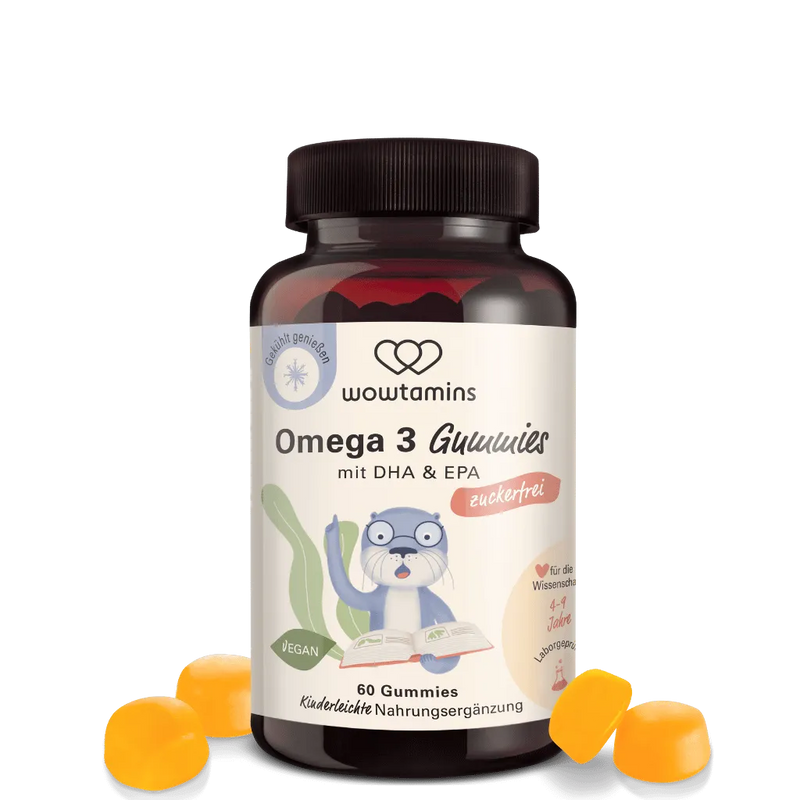
as delicious gummies
Other important nutrients
In addition to Omega 3 Kids Gummies and vitamin B12, there are other essential nutrients that deserve special attention in vegetarian and vegan diets. These include iron, calcium, iodine, vitamin D, zinc, and protein. Certain plant-based foods contain particularly high amounts of essential nutrients and should be included regularly in the diet. With targeted choices, many nutritional needs can be met effectively.
- Iron contributes to normal cognitive development in children and is important for the formation of red blood cells. However, plant-based iron sources such as lentils, chickpeas, and whole grains contain non-heme iron, which the body absorbs less efficiently. Combining them with vitamin C-rich foods such as bell peppers or oranges can improve absorption. Learn more about iron & minerals for children.
- Calcium is important for maintaining normal bones. While dairy products are a good source for vegetarians, vegans can turn to sesame, almonds, or calcium-fortified plant-based drinks.
- Iodine supports normal thyroid function and occurs naturally in fish and algae. In Germany, table salt is often fortified with iodine.
- Vitamin D contributes to the normal function of the immune system and is produced mainly through sunlight. During months with little sunlight, additional supplementation may be necessary. Read our blog article about vitamin D deficiency in children and adolescents.
- Protein is essential for growth, muscle function, and many metabolic processes in the body. Vegetarians can meet their protein needs with dairy products, while vegans can do so with legumes, tofu, quinoa, nuts, and seeds, for example.
With conscious food choices, a plant-based diet can be designed to provide all of these important nutrients.
Variety on the plate
A colorful and varied diet is the key to a balanced nutrient intake. Combining different plant-based foods allows you to make optimal use of the strengths of individual nutrients and compensate for potential deficiencies.
Choosing a varied diet with different colors, textures, and flavors makes it easy to ensure that as many important nutrients as possible are incorporated into the daily diet. This makes healthy eating not only nutrient-rich but also delicious and exciting for children.

Check blood levels regularly
Blood tests can help ensure adequate nutrient intake and detect possible deficiencies at an early stage. Regularly checking levels such as vitamin B12 (as holotranscobalamin), iron, vitamin D (as 25-OH-D), iodine, and omega-3 fatty acids (e.g. using the omega-3 index) is particularly worthwhile for those following a vegetarian or vegan diet.
Experts recommend having these levels checked about once a year, especially during periods of growth. If symptoms such as fatigue, difficulty concentrating, or pale skin occur, an earlier examination may be advisable. Blood levels can be tested by a pediatrician or naturopath to provide individually tailored recommendations for optimal nutritional intake.
Supplements for vegan and vegetarian children
A balanced plant-based diet can provide many essential nutrients. Nevertheless, some nutrients are either rarely found in plant-based foods or are present only in forms that are poorly absorbed. In such cases, targeted supplementation can provide valuable support for meeting nutritional needs.
- In particular, vitamin B12 should be obtained through fortified foods or supplements as part of a vegan diet, as it is found almost exclusively in animal products. For example, take a look at our vitamin B12 spray.
- Omega-3 fatty acids (DHA & EPA) are also important for children, but in their bioactive form they are found primarily in fish – microalgae oils or our sugar-free omega-3 gummies offer an alternative.
- During the winter months, vitamin D intake may be necessary, as the body primarily produces it through sunlight, which is insufficient in Germany from October to March.1 Our Vitamin D3 + K2 Gummies are available for this purpose.
- Iron should also be considered individually, especially if few iron-rich foods are consumed. You can find a delicious source for children and women in our sugar-free iron gummies.
Whether a dietary supplement is necessary depends on individual dietary habits and blood values. Consulting a pediatrician, naturopath, or nutrition professional can help you make the best decision for your child.
» Have you seen our multivitamins for children guide? In this comprehensive guide, our wowtamins team, made up of parents and experienced experts, gives you an honest and well-founded overview of the need for dietary supplements for children.
Frequently asked questions about nutrition and dietary supplements for vegetarian & vegan children

Is a vegetarian diet sufficient for children?
Yes, a well-planned plant-based diet can certainly be adequate and healthy for children. It is important to deliberately select nutrient-rich foods to ensure an adequate supply of essential vitamins and minerals.
Particular attention should be paid to certain nutrients such as vitamin B12, omega-3s, iron, vitamin D, and iodine. Medical supervision or advice from a nutrition expert can help ensure a balanced diet.
What are the consequences of a vegan diet?
A vegan diet can offer health benefits if it is well planned and covers all essential nutrients. However, an inadequately planned diet can lead to nutrient deficiencies, for example in vitamin B12, iron, or omega-3s.
It is therefore important to consider a varied diet with fortified foods or supplements to avoid potential deficiencies.
Which vitamin are vegans deficient in?
Vegetarians can obtain many nutrients from dairy products and eggs; however, vitamin B12 remains a critical nutrient because it is found almost exclusively in animal-based foods.
How important is meat for children?
Meat is a good source of nutrients such as protein, iron, vitamin B12, and zinc (in moderation), but these can also be obtained from plant-based and other animal sources, such as milk or eggs for vegetarians.
However, a balanced plant-based diet with legumes, whole grains, nuts, seeds, and many other foods can also help provide all the essential nutrients children need for their development.
Is a vegan diet suitable for children from birth?
According to professional organizations such as the German Nutrition Society (DGE), a vegan diet for infants and young children should only be followed with particular attention to ensuring optimal nutrient intake. Since certain nutrients occur exclusively or in sufficient amounts in animal-based foods, fortified foods or suitable supplements are essential to ensure healthy development. Support from a nutrition specialist with medical training is recommended.
Leave a comment
This site is protected by hCaptcha and the hCaptcha Privacy Policy and Terms of Service apply.