

Which vitamins are important for teenagers?
Puberty is one of the most intensive phases in a person’s life – and this applies not only to emotions and changes, but also to the body. Growth spurts, hormonal changes, school stress and a changing daily routine place enormous demands on teenagers’ bodies. It is therefore no surprise that the need for essential micronutrients – vitamins, minerals and trace elements – is particularly high during this phase.
At the same time, current nutrition studies show that more than half of teenagers between the ages of 12 and 17 do not reach the recommended intake levels for these micronutrients. Changing eating habits, fast food and growing independence when it comes to food all leave their mark – with potential consequences for nutrient intake during one of the most nutrient-intensive phases of life.
In this article, you will learn which vitamins and minerals are particularly important for teenagers, why their needs increase during puberty – and when it may be worth considering targeted supplementation.
Important note: Food supplements are not a substitute for a balanced and varied diet and a healthy lifestyle. If you have specific symptoms or questions about nutrient intake, we recommend consulting a doctor or qualified alternative practitioner.
- Take the quick test: Is your teenager well nourished?
- Why do adolescents have higher nutrient requirements?
- The most important vitamins for adolescents at a glance
- The most important minerals and trace elements for teenagers
- Omega-3 Fatty Acids: The Brain During Puberty
- When the body sends signals: Signs of deficiency during puberty
- The immune system during puberty
- Circulatory problems during puberty
- When can targeted nutrient supplementation be beneficial?
- Frequently asked questions about important vitamins for teenagers
Take the quick test: Is your teenager getting enough essential vitamins?
Answer these two questions:
1. Does your teenager eat three handfuls of vegetables and fruit in different colours and varieties every day?
2. Does your teenager eat a varied selection of nutrient sources every day – for example, legumes, nuts, seeds, eggs or dairy products?
If you answer Yes to both questions: Your teenager is probably well supplied with the most important nutrients. In this case, additional supplementation is usually not necessary.
If you answer No to one or both questions: This does not necessarily mean that your teenager is undernourished – but it is worth taking a closer look at their diet. Those who rarely eat a varied diet are at greater risk of falling short of the recommended amounts of individual nutrients. In this case, it may make sense to supplement their diet selectively or have their nutrient levels checked at their next doctor’s appointment.
Teens Complete Gummies
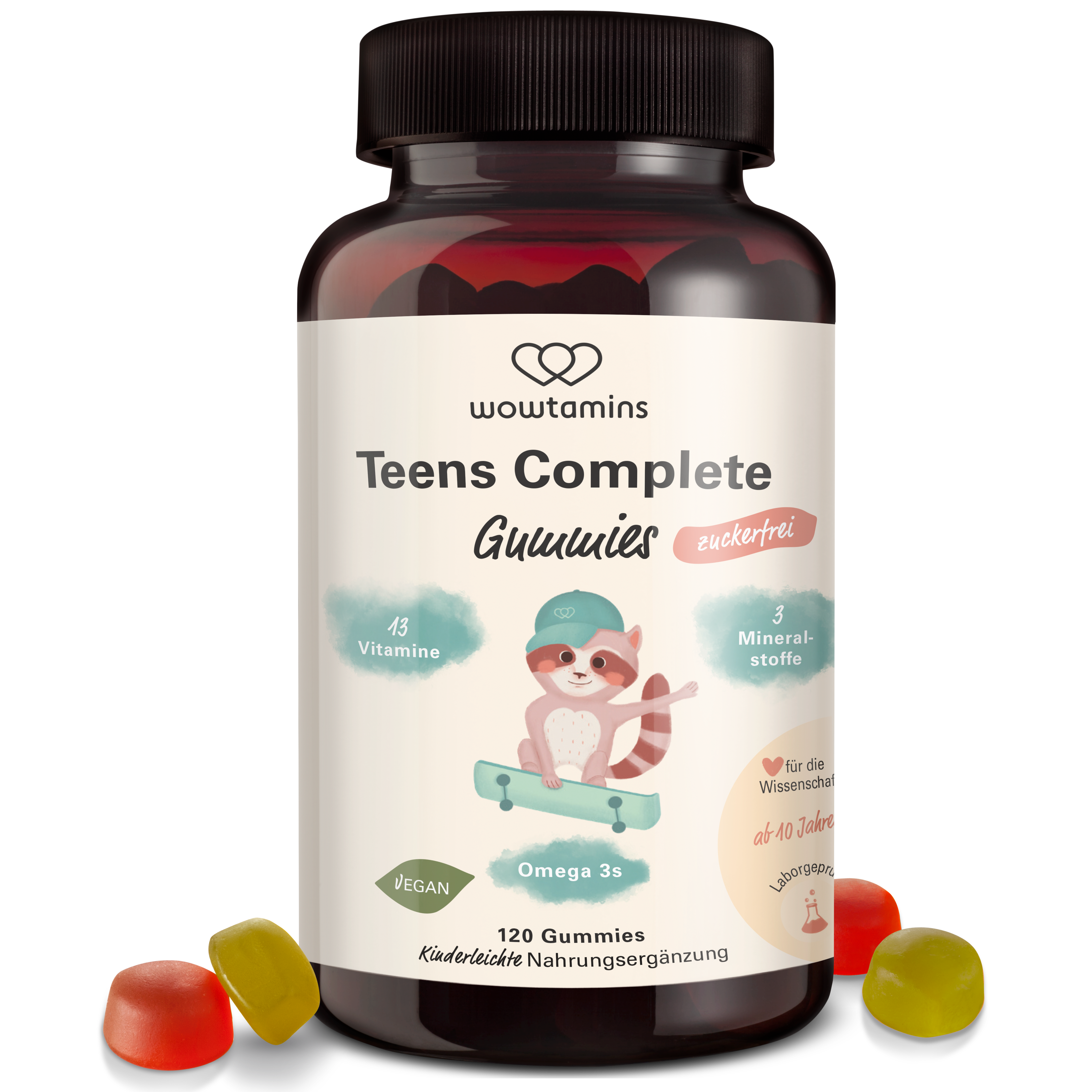
Teens Complete
Why do adolescents have higher nutrient requirements?
Before we take a closer look at the individual vitamins and minerals, it is worth looking at the bigger picture: Why is puberty actually so nutrient-intensive?

During this stage of life, the body changes at a pace otherwise seen only during the first year of life. The skeletal system grows rapidly—studies show that around 30% of total adult bone mineral content is formed during the three key years of puberty.3
Muscles develop, the brain continues to mature, hormones are produced in large quantities, and the immune system adapts to the new circumstances. All these processes require raw materials—and these raw materials are micronutrients.
The problem: Many teenagers display unhealthy eating habits during this phase.
The National Nutrition Survey II conducted by the Max Rubner Institute (2008), which collected representative data on food consumption among adolescents and adults in Germany, provides clear results: More than 87% of respondents fall below the German Nutrition Society (DGE) recommendation of 400 grams of vegetables per day—with the proportion even higher among adolescents.1
Fresh fish, green vegetables, and whole-grain products rarely appear on the menu—instead, fast food, convenience foods, and sugary drinks dominate.
The most important vitamins for adolescents at a glance
Vitamin D – The sunshine vitamin for bones and the immune system
Vitamin D3 plays a particularly important role during puberty, as it contributes to the absorption and utilization of calcium—and calcium is the main building material of the skeleton.
According to officially approved claims, vitamin D contributes to:
- for maintaining normal bones and teeth
- to the normal function of the immune system
- for normal muscle function
- for maintaining normal calcium levels in the blood
Vitamin D3 Gummies
Vitamin D3 for children & adolescents
The problem in Germany: Especially from October to March, sunlight is insufficient for the body to produce enough vitamin D on its own.
Adolescents who spend a lot of time indoors – at school, doing homework, or gaming – are particularly affected. The EsKiMo II study by the Robert Koch Institute (survey period 2015–2017) demonstrates the importance of vitamin D intake during childhood and adolescence: vitamin D deficiency is one of the most common nutrient deficiencies among growing children and adolescents in Germany.2
Important food sources: eggs, fortified foods (e.g., plant-based drinks), and time spent outdoors – the body's own production through sunlight is the most important source.
Vitamin C – For the immune system, energy, and connective tissue
Vitamin C is one of the vitamins that, according to EsKiMo II, a significant proportion of adolescents do not consume in the recommended daily amount. This is particularly relevant because vitamin C is involved in numerous bodily processes.
Vitamin C contributes to:
- to the normal function of the immune system
- to a normal energy-yielding metabolism
- for normal collagen formation – relevant for skin, bones, and connective tissue
Iron gummies
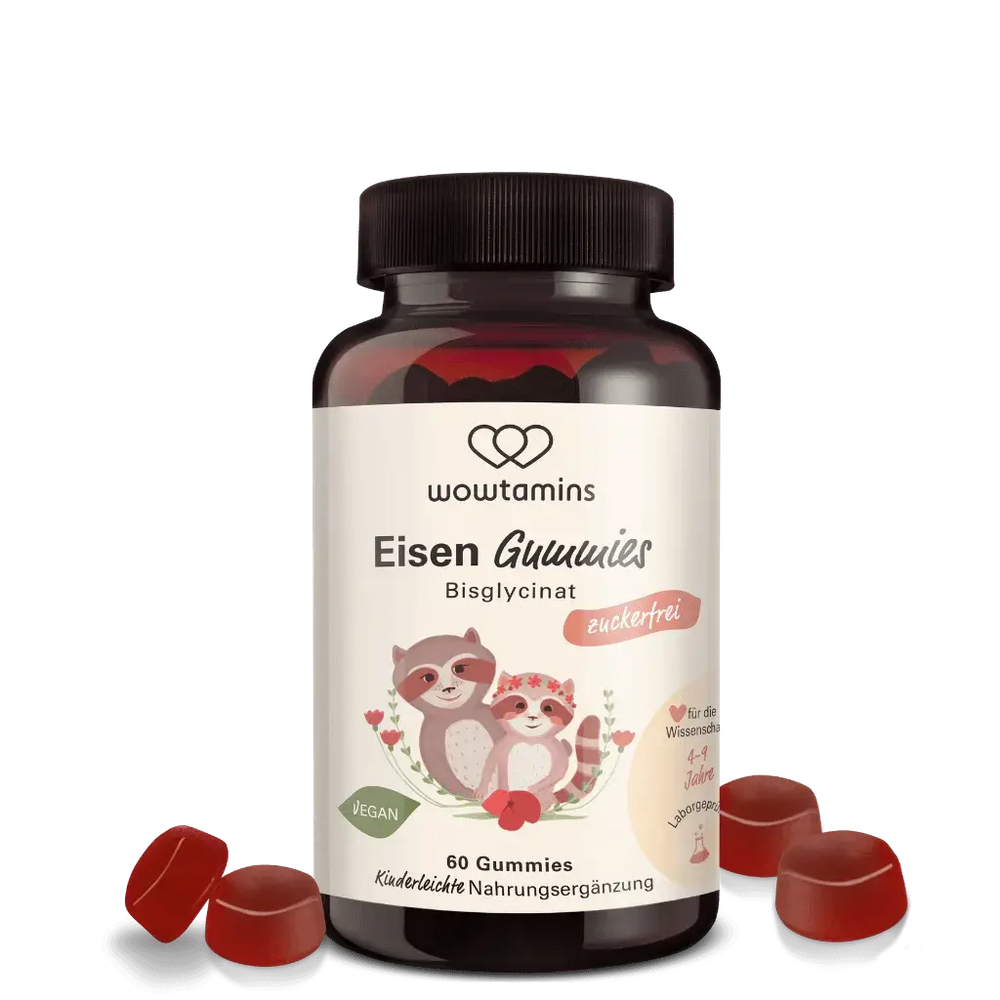
Iron Gummies with Vitamin C for Children & Adolescents
A good supply of vitamin C is particularly relevant during intensive periods at school, as well as during intensive sports activities.
Important food sources: peppers, broccoli, kiwi, oranges, and strawberries.
Vitamin A – For vision, skin, and the immune system
Vitamin A contributes to the maintenance of normal vision, normal skin and mucous membranes, as well as the normal function of the immune system. During puberty, when the skin and mucous membranes are already under considerable strain due to hormonal changes, an adequate supply plays an important role.
According to EsKiMo II (Robert Koch Institute, 2015–2017), which surveyed children and adolescents aged 6 to 17, more than 50% of 11- to 17-year-olds do not reach the recommended D-A-CH reference values for vitamin A.2
Important food sources: carrots, sweet potatoes, spinach (as beta-carotene), liver, and dairy products (as retinol).
Vitamin E – Cell protection during an intensive growth phase
Vitamin E is a fat-soluble vitamin that contributes to the protection of cells from oxidative stress. During a phase in which the body is growing and changing rapidly, this cellular protection is particularly relevant. According to EsKiMo II, vitamin E is also one of the nutrients that adolescents often consume below the recommended levels.2
Important food sources: vegetable oils, nuts, sunflower seeds and avocado.
The B vitamins – The team for nerves and development
The B vitamins are not lone players—they work as a team and are involved in almost every energy metabolism process in the body. During puberty, when energy requirements are higher than in any other stage of life except infancy, they are indispensable.
- Vitamin B1 (Thiamine) contributes to normal energy metabolism and the normal function of the nervous system.
- Vitamin B2 (Riboflavin) contributes to the maintenance of normal mucous membranes.
- Vitamin B6 (Pyridoxine) contributes to the normal function of the nervous system, normal protein metabolism and the regulation of hormonal activity—all processes that are particularly active during puberty.
- Vitamin B9 (Folate) contributes to normal cell division—a process that takes place particularly intensively during this phase of rapid growth. Adequate folate intake is especially important for girls. According to EsKiMo II, folate is one of the vitamins for which inadequate intake among children and adolescents has continued to increase compared with EsKiMo I (2006).2
- Vitamin B12 contributes to the normal function of the nervous system, normal blood formation and normal energy metabolism. It is particularly relevant for adolescents who follow a vegetarian or vegan diet, as vitamin B12 is found almost exclusively in foods of animal origin.
The most important minerals and trace elements for teenagers
In addition to vitamins, minerals and trace elements also play a central role during puberty.
Iron – Especially important for girls
Iron contributes to normal blood formation and to the reduction of tiredness and fatigue.
During puberty, girls’ iron requirements increase significantly with the onset of menstruation—monthly losses that need to be replenished through the diet.
Iron gummies
Iron gummies for children & adolescents – sugar-free
According to the German National Nutrition Survey II (Max Rubner Institute, 2008), only 25% of women aged 19 to 50 meet the recommended intake levels for iron—a situation that is comparably critical for adolescent girls.1 Typical signs may include tiredness, lack of energy, and paleness – symptoms that are often mistakenly considered a normal part of puberty.
Zinc – For Skin, the Immune System, and Cell Division
Zinc contributes to the normal function of the immune system, normal cell division, and the maintenance of normal skin.
During puberty, zinc is particularly relevant for several reasons: Growth requires a great deal of zinc – which plays an additional role during a phase in which the skin is heavily affected by hormonal changes.
According to EsKiMo II, zinc is one of the trace elements for which a significant proportion of adolescents do not reach the recommended intake levels.2
Iodine – For Thyroid and Cognitive Function
Iodine contributes to the normal function of the thyroid and normal cognitive function.
During puberty, the thyroid gland is under particular strain – it regulates growth, metabolism, and energy production. Germany is considered an iodine-deficient region. According to EsKiMo II, iodine intake among children and adolescents remains critical, further exacerbated by the declining consumption of iodized table salt.2
Magnesium – For Muscles, Nerves, and Energy
Magnesium contributes to normal muscle function, the normal functioning of the nervous system, and the reduction of tiredness and fatigue.
During a phase in which adolescents engage in intensive sports, study extensively, and undergo significant physical changes, magnesium is a particularly important nutrient.
According to the National Nutrition Survey II, up to 56% of female adolescents aged 14 to 18 do not consume the recommended daily intake of magnesium.1
Omega-3 Fatty Acids: The Brain During Puberty
Omega-3 fatty acids – especially DHA (docosahexaenoic acid) – contribute to the maintenance of normal brain function. The brain continues to mature during puberty, new neural connections develop, and the ability to learn is particularly high during this phase.
Omega 3 Gummies
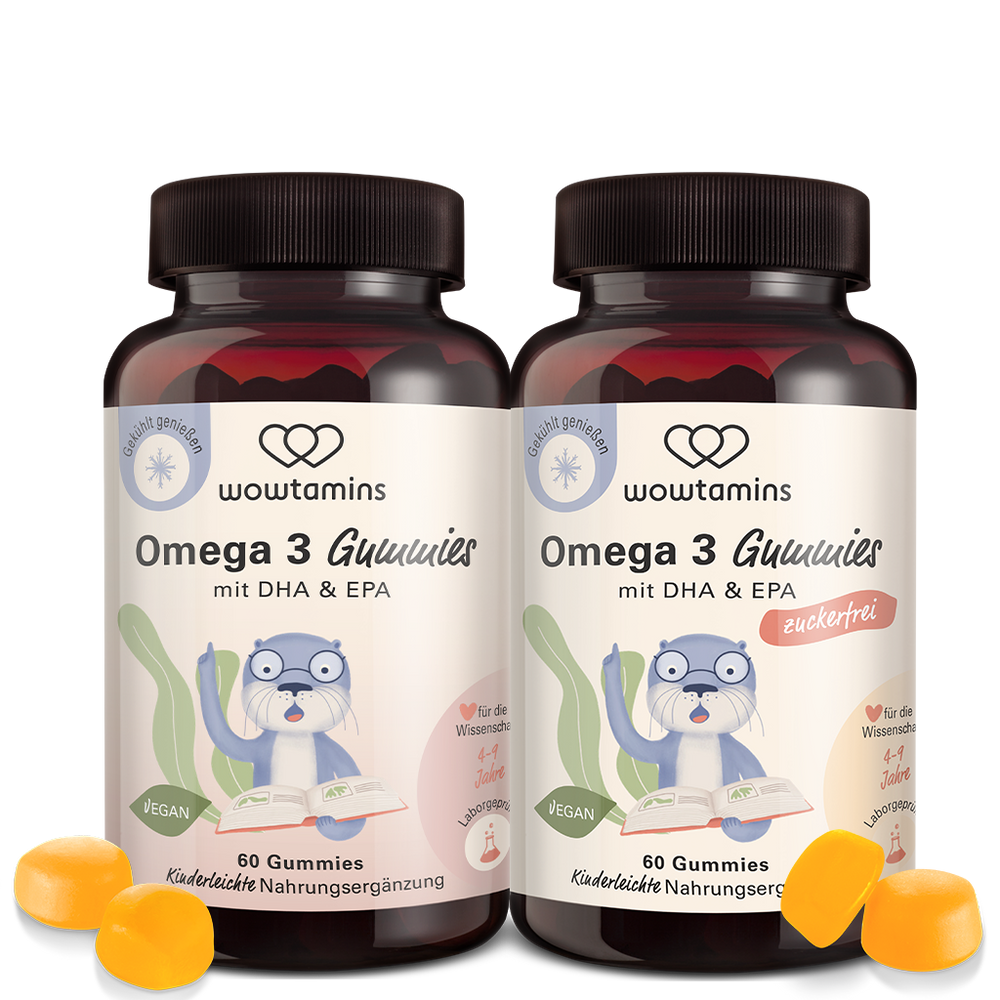
DHA is found in significant amounts in only a few foods. For families who avoid animal products or prefer a predominantly plant-based diet, algae oil is a proven alternative: It provides DHA and EPA directly from the source that fish also obtain their omega-3 fatty acids from.
When the body sends signals: Signs of deficiency during puberty
Nutrient deficiency during puberty rarely appears dramatically and immediately—most often, it develops gradually and diffusely.
Important to note: Tiredness, mood swings and concentration problems are often completely normal developmental changes during puberty and are not automatically a sign of an inadequate nutrient supply. However, if these symptoms are unusually severe or persistent and no other explanation can be found, a nutrient deficiency may be one of several possible causes:
- Persistent tiredness and exhaustion – despite getting enough sleep and lasting over an extended period
- Noticeable concentration problems – beyond the normal extent
- Unusually frequent infections – occurring significantly more often than in peers
- Circulatory problems – dizziness, seeing black when standing up quickly
- Pale skin and brittle nails
Important: These symptoms can have many causes. If you notice them in your child, we recommend speaking with a doctor or naturopath first. Only a blood test can clearly show whether a nutrient deficiency is present.
The immune system during puberty
The immune system of adolescents is under particular strain during puberty. Schools, sports centers and leisure activities are genuine breeding grounds for infections—and at the same time, the immune system itself changes due to the hormonal shifts of puberty.
Vitamins such as vitamin C, vitamin D and zinc contribute to the normal function of the immune system.
Circulatory problems during puberty
A topic many parents are familiar with: Their teenager feels dizzy when standing up quickly, briefly sees black, or feels weak. Circulatory problems during puberty are widespread and often have several causes—including rapid growth, which presents new challenges for the cardiovascular system, as well as possible nutrient deficiencies such as iron deficiency or an inadequate supply of vitamin B12 and folate.
When can targeted nutrient supplementation be beneficial?
Supplementation—meaning the targeted intake of certain micronutrients through products—is useful when the diet does not provide all the necessary nutrients in sufficient amounts. During adolescence, this may particularly often be the case when:
- the diet is unbalanced (lots of fast food, hardly any vegetables)
- a vegetarian or vegan diet excludes certain nutrient sources
- there is an increased requirement due to growth spurts, intensive sports, or periods of high academic demands
- early signs of deficiency have appeared and been medically evaluated
Dietary supplements for teenagers should always be appropriately dosed for their age and specifically tailored to the needs of adolescents. What is suitable for children under 10 is often no longer optimal for an 11- or 15-year-old going through puberty—and vice versa.
Frequently asked questions about important vitamins for teenagers
Which vitamins are teenagers most commonly deficient in?
According to EsKiMo II (Robert Koch Institute, survey period 2015–2017), more than 50% of teenagers do not achieve the recommended intake levels for vitamins A, C, D, and E, or folate. Among the trace elements, calcium, iron, iodine, and zinc are often under-supplied.2
At what age do teenagers need different vitamin supplements than children?
From around age 10—the beginning of prepuberty—nutrient requirements increase significantly compared with younger children. Products developed for children between 4 and 9 years old are often no longer optimally dosed for teenagers going through puberty.
Should teenagers take dietary supplements on a long-term basis?
That depends on the individual situation. If the diet is consistently unbalanced, ongoing supplementation may be beneficial. In the case of a confirmed deficiency, the duration of use should follow medical advice. In general, dietary supplements complement a healthy diet—they do not replace it.
Are vitamin gummies useful as dietary supplements for teenagers?
Yes, if they are specifically tailored to teenagers’ nutrient requirements and developed in the correct dosage. What matters is whether the nutrient amounts correspond to the reference values for adolescents—not the form of administration.
Do girls need different vitamins from boys during puberty?
In many respects, the needs are similar. One significant difference concerns iron: girls have a considerably higher iron requirement than boys due to the onset of menstruation.
From what age is someone considered an adolescent—is there a clear definition?
There is no uniform definition of the term “adolescent.” In nutritional science, the term is often used for the 11- to 17-year-old age group, as in the EsKiMo II study. The German Nutrition Society (DGE) publishes separate reference values for adolescents, which differ from those for children and adults. As a rule, classification as an “adolescent” begins with the onset of puberty, that is, at around 10 to 12 years of age.
References
URL: https://www.mri.bund.de/fileadmin/MRI/Institute/EV/NVSII_Abschlussbericht_Teil_2.pdf
[2] Mensink, G. B. M. et al. (2021): EsKiMo II – The nutrition study as a KiGGS module. Robert Koch Institute, Berlin. Survey period: June 2015 – September 2017.
URL: https://edoc.rki.de/handle/176904/6887.2
[3] German Journal of Sports Medicine: Relationship between sports during puberty and peak bone mass.
URL: https://www.zeitschrift-sportmedizin.de/zusammenhang-zwischen-sport-in-der-pubertaet-und-der-peak-bone-mass/
— as well as: Steckelbroeck, S. et al. (2010): Depot MPA and bones. In: Obstetrics and Gynecology. Thieme.
URL: https://www.thieme-connect.com/products/ejournals/abstract/10.1055/s-0030-1269965
Mandatory information: Food supplements are not a substitute for a balanced and varied diet and a healthy lifestyle. The recommended daily intake must not be exceeded.
Leave a comment
This site is protected by hCaptcha and the hCaptcha Privacy Policy and Terms of Service apply.