
Which foods are high in iron for children? An iron-rich diet, tips & recipe ideas
A balanced diet is the foundation for children’s healthy growth and vitality. The trace element iron plays a key role in this: its functions include the formation of blood, the continuous transport of oxygen to the muscles and brain, and normal cognitive development.⁴
In everyday life, many parents face the challenge of putting together a menu that gets enough iron onto the plate – especially with fussy eaters or with a vegetarian family diet. This article provides a practical summary of which foods are particularly rich in iron, how animal and plant sources of iron differ, and which simple tricks you can use to significantly increase iron absorption.
Key points at a glance
- Haem iron from animal foods is usually absorbed better (15–35%) than non-haem iron from plant sources (2–20%).
- But it doesn’t have to be meat every day: pulses, seeds, wholegrains and dried fruit are strong plant-based sources of iron.
- Vitamin C contributes to increased iron absorption – it can significantly improve absorption from plant-based food.
- Milk, tea and phytates can inhibit absorption. Leaving a time gap from iron-rich meals helps.
- With this combination, the iron supply can be managed well within the framework of a balanced diet.
All topics at a glance
- Why iron is so important for children
- Haem iron vs. non-haem iron: the two types of dietary iron
- The best iron-rich foods for children at a glance
- The vitamin C booster: how iron absorption improves
- Iron robbers in everyday life: what inhibits iron absorption?
- Iron in a vegetarian and vegan children’s diet
- Practical recipe ideas & everyday tips for families
- Diet in cases of diagnosed iron deficiency: medical context
- Frequently asked questions about iron-rich foods for children
Why iron-rich foods are so important for children
Iron is a component of haemoglobin and is involved in the formation of blood, oxygen transport and energy metabolism. The iron requirement is comparatively high in relation to body weight, and greatest in babies between 6 and 12 months.
If the supply remains too low over the long term, this can impair physical performance and lead to anaemia, which disrupts the transport of oxygen in the body. Possible signs such as paleness, persistent tiredness or hair loss are, however, non-specific. You can read about which symptoms may occur and how diagnosis works in the guide “Iron deficiency in children”; how much iron a child needs depending on age is covered in the article “How much iron per day for children?”.
The differing requirement applies not only to children: women of childbearing age (around 16 mg/day), as well as pregnant and breastfeeding women, need considerably more iron than men and other adults, because iron is lost through menstruation and the requirement rises in the womb.
Haem iron vs. non-haem iron: the two types of dietary iron
Iron occurs in our food in two different chemical forms, which the child’s gut can utilise to differing degrees:¹
-
Haem iron: Occurs exclusively in animal foods – above all in red meat, poultry and fish. It is bound to haemoglobin and myoglobin and is absorbed very efficiently; the absorption rate is around 15 to 35 percent. Other dietary components have little influence on absorption.¹
-
Non-haem iron: Found in plant foods such as grains, pulses, nuts and vegetables, as well as in eggs. At around 2 to 20 percent, the absorption rate is considerably lower and is sensitive to accompanying substances: promoting substances such as vitamin C can multiply absorption, while inhibiting substances such as calcium or phytates slow it down.¹
Bioavailability compared: Iron from animal foods (haem iron) 15–35% · iron from plant foods and eggs (non-haem iron) 2–20%.¹
The best iron-rich foods for children at a glance
Meat doesn’t have to be on the table every day to keep children well supplied. A clever selection of wholegrain products, pulses, seeds and vegetables provides considerable amounts of iron. The following table shows iron-containing foods by category:³
| Category | Food | Iron content (approx. per 100 g) | Child-friendly portion & practical tip |
|---|---|---|---|
| Offal | Pig’s liver | approx. 20 mg | Very rich in iron – but only rarely & in small amounts for young children because of the high vitamin A content. |
| Seeds & kernels | Pumpkin seeds | 12.5 mg | Finely ground in muesli or a smoothie. |
| Seeds & kernels | Sesame / tahini | 10.0 mg | As a spread or ingredient in dips and sauces. |
| Pulses | Lentils (dried) | 8.0 mg | As a creamy soup or lentil bolognese. |
| Grains | Millet | 6.9 mg | As a warm millet porridge or side dish. |
| Pulses | Chickpeas | 6.0 mg | As a mild hummus on wholegrain bread. |
| Grains | Rolled oats | 4 to 5 mg | Classic porridge for breakfast. |
| Dried fruit | Dried apricots | 4.4 mg | Chopped into yoghurt or as a snack on the go. |
| Nuts & seeds | Almonds / almond butter | 3.7 mg | As a butter in porridge or a snack for older children. |
| Meat | Beef (lean) | 2.5 to 3.0 mg | Minced beef in tomato sauce. |
| Vegetables | Spinach & peas | 1.5 to 2.5 mg | Pureed into pasta sauces or soups. |
| Eggs | Hen’s egg (yolk) | 1.1 mg (each) | Boiled egg or scrambled egg for breakfast. |
Two things are worth knowing: vegetables such as spinach and peas do contain iron, but it is absorbed less well than iron from meat – here, combining it with vitamin C helps. And a widespread myth: beetroot is often regarded as particularly rich in iron, but with around 0.8 mg per 100 g it actually provides comparatively little.
Meat is therefore a good, but not a necessary, source of iron. In line with this, the DGE recommends limiting the consumption of meat and sausage products anyway – around 300 g per week is the guideline value.³ You can find exactly how much iron your child needs depending on age and stage of development in the separate guide “How much iron per day for children?”.
The vitamin C booster: how iron absorption improves
The most effective natural enhancer for plant-based iron is vitamin C (ascorbic acid). In the acidic environment of the stomach, it converts the poorly soluble non-haem iron into the easily absorbable form and prevents inhibiting substances from binding the iron into an insoluble state.¹ Even moderate amounts (around 25 to 50 mg from fresh fruit or vegetables) can increase iron absorption from a plant-based meal two- to threefold.¹
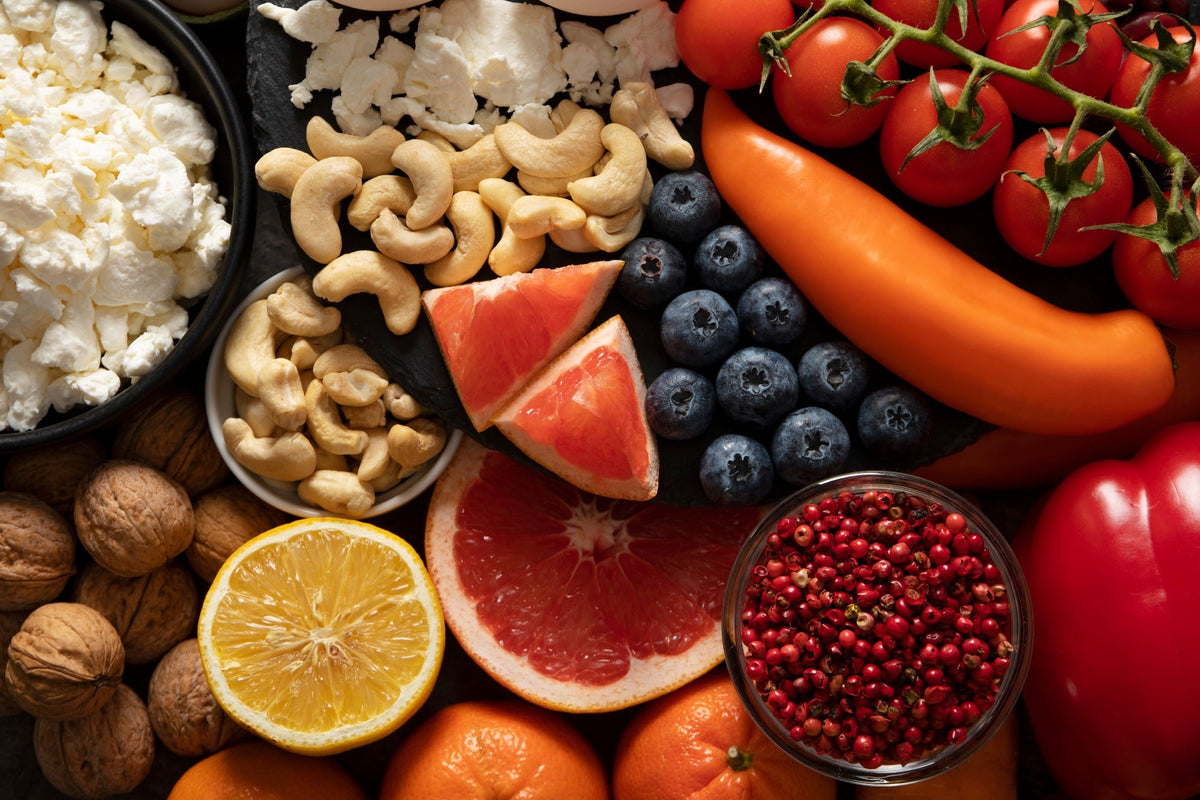
Good sources of vitamin C are oranges and orange juice, peppers, berries, tomatoes and citrus fruits. Ideal everyday combinations:
-
Serve rolled oats or millet with fresh berries, mandarins or a splash of orange juice.
-
Combine wholegrain bread or lentil dishes with red pepper, tomatoes or raw vegetable sticks.
-
Enhance vegetable soups with a little fresh parsley or a squeeze of lemon juice.

Iron robbers in everyday life: what inhibits iron absorption?
Just as there are promoters, there are dietary components that bind iron in the gastrointestinal tract and reduce its bioavailability:¹
-
Calcium and cow’s milk: Calcium can reduce the absorption of both haem and non-haem iron. According to paediatric guidelines, young children should drink no more than 500 ml of unmodified cow’s milk per day; ideally, dairy products are offered at a different time and not directly with iron-rich main meals.²
-
Phytates in wholegrains and pulses: Phytic acid binds minerals into poorly soluble complexes. Soaking, cooking, fermenting (e.g. sourdough) or sprouting breaks it down and releases the iron.¹
-
Tannins and polyphenols: They are found above all in black and green tea, as well as in some herbal teas, and form stable complexes with iron. With main meals, water or diluted fruit spritzers are the better choice.
Iron in a vegetarian and vegan children’s diet
Children can also be adequately supplied with iron on a vegetarian or purely plant-based diet, provided a few basic rules are observed. Since iron from plant foods is less readily available, the selection and combination matter particularly here:
-
Choose grains deliberately: Millet, rolled oats and pseudo-grains such as quinoa or amaranth provide considerably more iron than white wheat flour or polished rice.
-
Firmly plan in pulses: Lentils, chickpeas, beans and tofu should be a regular part of meals several times a week.
-
Use nut butters and seeds: A teaspoon of almond butter, tahini or ground pumpkin seeds in porridge or yoghurt enriches meals with micronutrients.
-
Combine consistently: Every plant-based source of iron should be paired with a fresh source of vitamin C.¹
Practical recipe ideas & everyday tips for families
1. Breakfast: power millet porridge. Ingredients: 40 g millet or rolled oats, 150 ml water or plant-based drink, 1 tsp almond butter, 1 handful of fresh berries, 1 tsp ground pumpkin seeds. Method: briefly bring the flakes to the boil and leave to swell, stir in the almond butter and pumpkin seeds, and garnish with berries as a vitamin C booster.

2. Lunch: colourful lentil bolognese. Ingredients: 100 g red lentils, 1 grated carrot, ½ red pepper (finely diced), 1 tin of chopped tomatoes, wholegrain pasta. Method: sweat the vegetables, add the lentils and tomatoes, simmer for about 15 minutes and serve with wholegrain pasta. The tomatoes and pepper maximise bioavailability.
3. Snack: fruity iron balls. Ingredients: 100 g dried apricots, 50 g rolled oats, 50 g pumpkin seeds, 1 tbsp orange juice. Method: blitz everything in a blender, shape into balls and keep in the fridge – ideal for the lunchbox.
Diet in cases of diagnosed iron deficiency: medical context
An optimised diet forms the indispensable basis for a stable iron supply in everyday life.
Important note for parents: If a child has been diagnosed with manifest iron-deficiency anaemia through a blood test, a change of diet alone is not enough. When the stores are depleted, a targeted therapeutic iron supplementation prescribed by the paediatrician over several months is necessary.⁵ An iron-rich diet ensures that the stores remain sustainably filled once they have been replenished.
You can find out in detail which symptoms occur with an inadequate supply and how diagnosis works at the paediatrician’s in the guide “Iron deficiency in children”.
For general support of nutrient intake in a healthy family routine, many parents choose practical dosage forms such as fruity gummies. Among other things, iron contributes to the normal formation of red blood cells; you can find the exact nutritional information and ingredients of the product directly on the product page for the iron gummies.
Frequently asked questions about iron-rich foods for children
Can my child absorb too much iron through diet?
Through normal foods this is hardly possible: the gut regulates the absorption of non-haem iron according to need. Caution only applies to high-dose iron supplements – those belong under medical supervision.
Does cow’s milk contain enough iron for babies?
No. Cow’s milk is naturally very low in iron and additionally inhibits its absorption. That is why it is not a suitable main drink in the first year of life and should be limited in quantity for young children.
Are iron fruit gummies just as effective as tablets or drops?
That depends above all on the amount and form of iron contained, not on the dosage form itself. Fruit gummies are more pleasant for many children to take, but usually contain moderate doses to supplement a balanced diet. To treat medically diagnosed iron-deficiency anaemia, by contrast, higher-dose supplements are prescribed by a doctor. The amount a specific product provides is stated on the packaging or product page.
At what time of day is it best to give iron-rich meals?
There is no fixed “right” time. What matters is more the combination: an iron-rich meal together with a source of vitamin C (e.g. fruit) and with a time gap from larger amounts of milk, tea or coffee. In practice, breakfast or lunch is often a good option, because vitamin C-rich sides are easy to include here.
Professional note: This article is intended for general information and does not replace medical or nutritional advice. If you have questions about your child’s iron supply, please consult a paediatrician or a qualified health practitioner you trust.
Legal context and scientifically verified effects
In accordance with the European Food Safety Authority (EFSA) and the Health Claims Regulation (EC) No 1924/2006, the following physiological functions of iron are scientifically confirmed:⁴
-
Iron contributes to normal cognitive development of children.
-
Iron contributes to a normal energy metabolism and to the reduction of tiredness and fatigue.
-
Iron contributes to the normal formation of red blood cells and haemoglobin as well as to normal oxygen transport in the body.
-
Iron contributes to normal function of the immune system.
Sources
-
Hurrell, R. & Egli, I. (2010): Iron bioavailability and dietary reference values. The American Journal of Clinical Nutrition, 91(5), 1461S–1467S.
-
ESPGHAN Committee on Nutrition (Domellöf, M. et al., 2014): Iron Requirements of Infants and Toddlers: A position paper by the ESPGHAN Committee on Nutrition. Journal of Pediatric Gastroenterology and Nutrition, 58(1), 119–129.
-
German Nutrition Society (DGE) (2024): Reference values for nutrient intake: Iron and FAQ Iron. DGE e. V., Bonn.
-
European Food Safety Authority (EFSA) (2015): Scientific Opinion on Dietary Reference Values for iron. EFSA Journal, 13(10):4254.
-
American Academy of Pediatrics (AAP) (Baker, R. D. et al., 2010): Diagnosis and Prevention of Iron Deficiency and Iron-Deficiency Anemia in Infants and Young Children (0–3 Years). Pediatrics, 126(5), 1040–1050.
Leave a comment
This site is protected by hCaptcha and the hCaptcha Privacy Policy and Terms of Service apply.