

Vitamins, minerals and omega-3 in the context of ADHD
Over the past two decades, numerous scientists around the world have studied the effects of vitamin and mineral deficiencies on the symptoms of attention-deficit/hyperactivity disorder (ADHD). Since, according to the results of the EsKiMo study, a high percentage of children in Germany do not get enough essential micronutrients from their diet, all parents should be familiar with the latest research findings.
- what current studies say about the connection between vitamins, minerals, and ADHD
- why many scientists believe that omega-3 fatty acids, vitamin D, and iron play an important role in ADHD
- what your child's diet has to do with ADHD
If you are just beginning to explore this topic, we recommend starting with our article ADHD in children – what is it?.
Children with ADHD often have an inadequate intake of micronutrients
A large number of scientific studies demonstrate a connection (correlation) between ADHD and reduced levels of vitamins and minerals in the blood. Below, we discuss some of the research.
Norwegian scientists from the University of Bergen examined blood samples from 133 patients with ADHD and 131 control subjects aged between 18 and 40. They reached the following conclusion:
"The study participants with ADHD have lower concentrations of vitamins B2, B6, and B9 (folic acid) than the healthy comparison group."2
Research teams from Qatar and Turkey found that blood vitamin D levels (25-OH-vitamin-D3) are significantly lower in children and adolescents with ADHD than in healthy peers.3-5
The results of a 2018 meta-analysis published by scientists from Taiwan in the renowned journal Nature, as well as two clinical studies by the Hamad Medical Corporation in Qatar and Burdwan Medical College (India), indicate a link between low iron levels (serum iron, ferritin) and attention-deficit/hyperactivity disorder in children.6-8
Omega-3 fatty acid intake also appears to be insufficient in people with ADHD. (To better understand and learn about the biological foundations: Why omega-3 fatty acids are so important for the overall development of the nervous system, it is helpful to take a look at the core functions of these fats.)
This is the conclusion reached by scientists at Purdue University in the United States as part of a case-control study:9
"It was found that the proportion of omega-3 fatty acids in the plasma phospholipids and erythrocytes of the ADHD group was significantly lower than in the control group, while the proportion of saturated fatty acids was higher."
In other words, the blood of people with ADHD contains a significantly lower proportion of omega-3 fatty acids than that of healthy people.
Regardless of specific diagnoses, the available evidence shows one thing above all: Reliable and uninterrupted intake of essential fatty acids and micronutrients is fundamental to healthy development during growth.
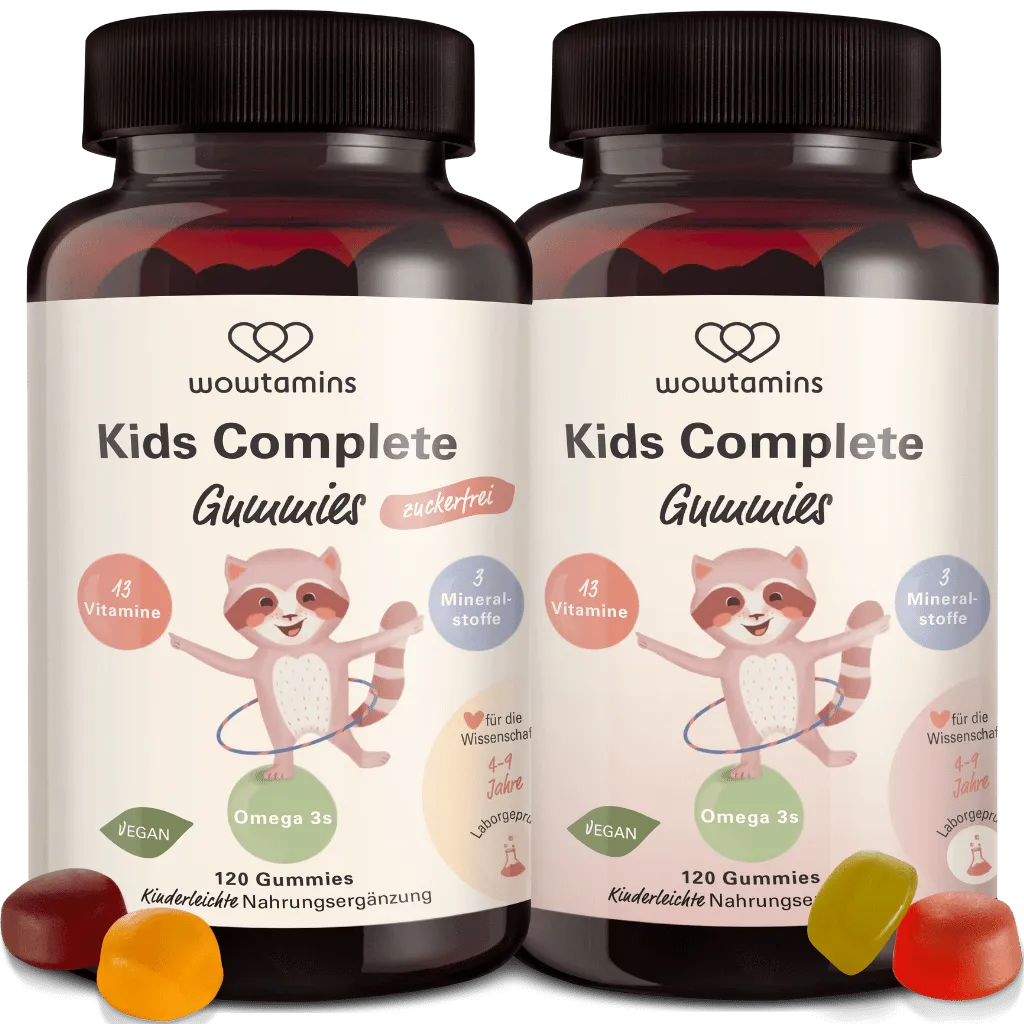
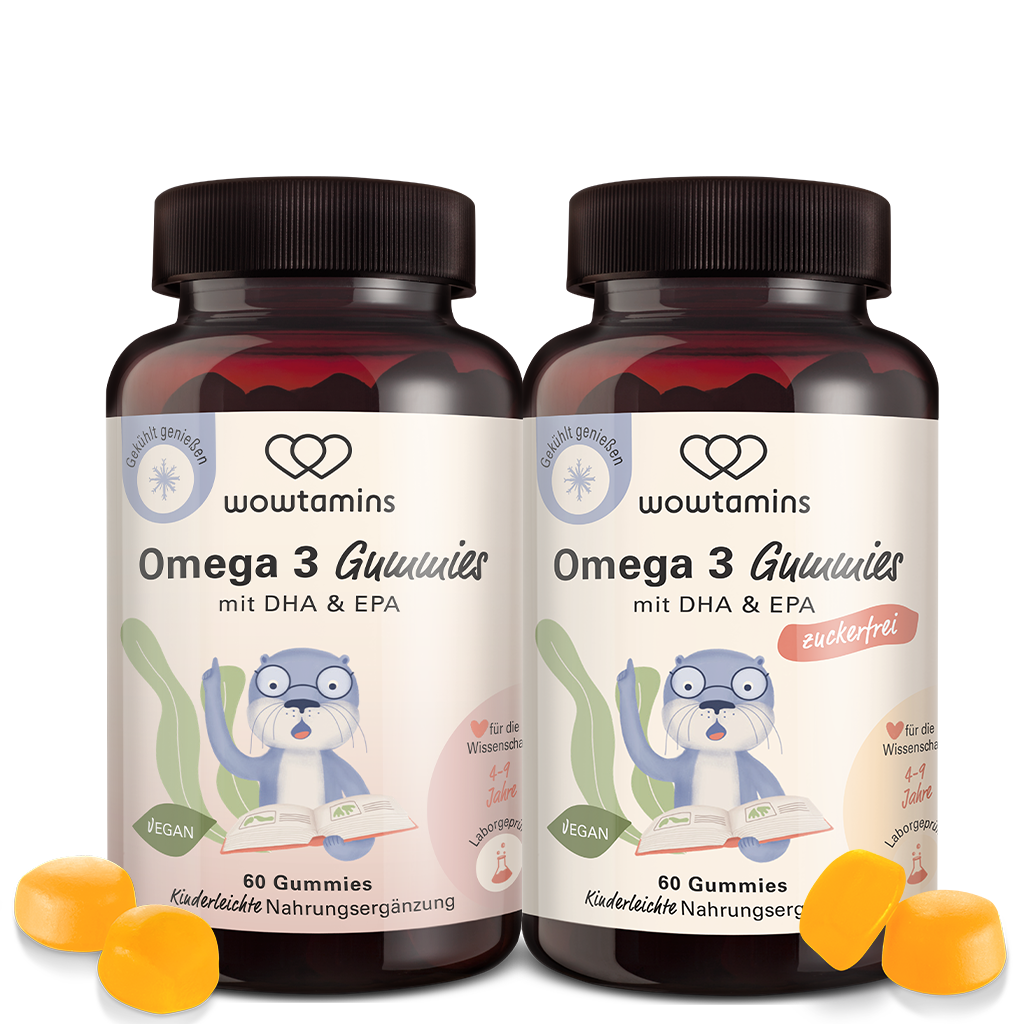
Since the omega-3 fatty acid DHA has been proven to contribute to the maintenance of normal brain function, we have developed a practical solution for everyday life. Our sugar-free omega-3 gummies for children and teenagers provide plant-based, high-dose, and especially child-friendly support for the daily routine.
Learn more about the topic: What role do vitamins, minerals, and omega-3s play in ADHD?, Benefits of omega-3 algae oil for children, and Supporting concentration in children.
ADHD studies with vitamin D
Recently, scientists published two research papers examining the impact of vitamin D on ADHD symptoms. One of the studies was conducted with 50 children with ADHD and 40 healthy peers. Half of the participants received vitamin D, while the rest took an ineffective substance (placebo).
One study reported changes in attention, impulsivity and hyperactivity scores in children with ADHD; findings on this topic are mixed and not established.10
A similar result was obtained in the second study, which involved 70 hyperactive children aged 6 to 13. For three months, half of the participants received 1,000 IU (25 micrograms) of vitamin D3 daily. The other children received a placebo during this period. Compared with the placebo group, participants in the vitamin D group were significantly less impulsive after three months.11
A 2019 review (meta-analysis) evaluating four clinical double-blind studies involving a total of 256 children reached the following conclusion: The authors described the observed changes as preliminary; a benefit of supplementation for ADHD is not established.12
Studies on ADHD with omega-3 fatty acids
Scientific studies involving more than 4,000 patients in total examined the effects of taking omega-3 fatty acids on ADHD symptoms. Below, we present the most important findings as literally translated quotations from the summary (abstract):
1. Effects of omega-3 fatty acids on externalizing behavioral problems
In 2015, an American research group from the University of Pennsylvania published a paper entitled Reduction of Behavioral Problems Through Omega-3 Supplementation in Children Aged 8–16. The scientists describe their results as follows:13
“The results provide initial evidence that omega-3 fatty acid supplementation can lead to a sustained reduction in externalizing and internalizing behavioral problems.”
Psychiatrists use the term externalizing behavioral problems to describe symptoms associated with ADHD and conduct disorder (CD).
2. Effect on mental health and cognitive abilities
A meta-analysis by a research team from King’s College London and China Medical University Hospital in Taichung, Taiwan, found the following:14
“In summary, it can be concluded that monotherapy with omega-3 fatty acids (n-3 PUFAs) improves clinical symptoms and cognitive performance in children and adolescents with ADHD, and that these adolescents have an omega-3 fatty acid deficiency. Our results support the use of omega-3 fatty acids as a treatment option for ADHD.”
A 2018 study by Spanish scientists entitled "Effects of omega-3 fatty acids and other non-pharmacological measures on the behavior and quality of life of children with behavioral problems in Spain" reaches the following conclusion:15
"Omega-3 fatty acid supplementation alone or in combination with other non-pharmacological treatments is effective in improving children's mental health. Overall, non-pharmacological recommendations currently made by pediatricians appear to be effective in improving patients' health status and quality of life and reducing health problems, particularly hyperactivity/inattention and behavioral disorders."

3. Effects on hyperactivity, impulsivity, and inattention
In 2017, British scientist and director of Nutritional Insight, Dr. Emma Derbyshire, conducted a systematic review of 16 randomized, placebo-controlled studies involving a total of 1,514 children and adolescents with ADHD.
"13 of the studies reported positive effects of omega-6 and omega-3 fatty acids on ADHD symptoms, including improvements in hyperactivity, impulsivity, attention, visual learning, word reading, and working/short-term memory."16
How are vitamin D, omega-3 fatty acids, and ADHD connected?
Several studies have demonstrated the effect of vitamin D on the body's production of the neurotransmitters dopamine and serotonin, as well as a number of neurotrophic factors.17
Scientists now believe that people with ADHD have insufficient dopamine levels. A serotonin deficiency may be responsible for hyperactivity.18,19
An Iranian research team from Tehran University of Medical Sciences conducted a study in 2019 involving 86 children with ADHD. Half of the participants received a dietary supplement containing 2,000 international units (IU) of vitamin D3 per day for a period of 12 weeks. The rest received a placebo. As a blood test at the end of the study showed, dopamine levels had increased significantly in the vitamin D group, while serotonin levels remained unchanged.17
According to medical professionals at the Children's Hospital Oakland Research Institute in California, vitamin D and the omega-3 fatty acids eicosapentaenoic acid (EPA) and docosahexaenoic acid (DHA) influence the production, release, and effects of serotonin in the brain.20
ADHD study involving the trace element iron
In 2008, French researchers published a clinical study involving 23 children with ADHD aged 5 to 8. All participants had low iron levels (ferritin below 30 micrograms per liter). None of the study participants had anemia (anemia).
Eighteen of the children took an iron supplement (80 milligrams of iron sulfate) every day for 12 weeks, while the remaining five received a placebo. During the study, ADHD symptoms decreased significantly in the iron group, while they remained unchanged in the placebo group.21
Study results on taking dietary supplements containing vitamins and minerals
In 2018, a research group from New Zealand published a double-blind study involving 93 children with ADHD aged 7 to 12. Over a period of ten weeks, 47 participants took a dietary supplement containing vitamins and minerals every day. The remaining 46 participants received a placebo.
After ten weeks, almost half (47 percent) of the children in the vitamin and nutrient group showed a substantial to very substantial improvement in the overall clinical impression (Clinical Global Impression Scale, CGI). Thanks to the supplement, one-third of the children in this group were significantly more attentive than before.22

The study participants in the micronutrient group continued to take the dietary supplement every day as their only treatment. After one year, psychiatrists assessed ADHD symptoms, mood, and anxiety. The result: In 84 percent of the children, the overall condition had improved significantly compared with the baseline at the beginning of the study.23
ADHD and diet
An unhealthy diet appears to increase the risk of ADHD. Studies have reached the following conclusions:
- A Western-style diet (sugary and processed foods, saturated fatty acids, and little fiber) may be associated with ADHD.24
- Students who regularly consumed energy drinks had a 66 percent higher risk of hyperactivity/inattention.25
- Children who consumed large amounts of sugary drinks were four times as likely to develop ADHD as children who avoided such drinks.26
- Artificial colorants or the preservative sodium benzoate (or both) in the diet lead to increased hyperactivity in 3- and 8-year-old children, and in 9-year-old children, respectively, in the general population.27
- Avoiding foods with artificial color additives (identified by their E numbers) can lead to a reduction in ADHD symptoms.28
Through a statistical analysis of the dietary habits of children and adolescents with ADHD and healthy peers, Spanish scientists established the following correlation: The more fresh fruit and vegetables and oily fish—the so-called Mediterranean diet—a child consumes, the lower the risk, of developing ADHD.29
A Korean research group confirmed this finding. Based on a survey of 192 elementary school students, the scientists demonstrated the following: A healthy diet with
- little fat,
- a high proportion of carbohydrates
- foods containing minerals and unsaturated fatty acids,
reduces the risk of developing ADHD.30
Summary of the study results
Although ADHD has genetic causes, numerous factors influence the development and course of the disorder. Current scientific research shows that taking vitamin D3, omega-3 fatty acids, iron, and multivitamin/multimineral supplements can positively affect behavioral problems in children.
In addition, a varied diet rich in fresh fruit and vegetables, legumes, whole-grain products, fish, and olive oil (the Mediterranean diet) appears to reduce the likelihood of developing ADHD. We are taking these groundbreaking scientific findings as an opportunity to provide parents of affected children with 9 helpful tips in our next article: ADHD in children – what can affected parents do?
Sources
[2] Landaas ET et al. Vitamin levels in adults with ADHD. BJPsych Open. 2016 Nov;2(6):377–384.
[3] Kamal M et al. Is high prevalence of vitamin D deficiency a correlate for attentiondeficit hyperactivity disorder? Atten Defic Hyperact Disord. 2014 Jun;6(2):73-8.
[4] Goksugur SB et al. Vitamin D status in children with attention-deficit-hyperactivity disorder. Pediatr Int. 2014 Aug;56(4):515-9.
[5] Bala KA et al. Hormone disorder and vitamin deficiency in attention deficit hyperactivity disorder (ADHD) and autism spectrum disorders (ASDs). J Pediatr Endocrinol Metab. 2016 Sep 1;29(9):1077-82.
[6] Tseng P et al. Peripheral iron levels in children with attention-deficit hyperactivity disorder: a systematic review and meta-analysis. Sci Rep. 2018 Jan 15;8:788.
[7] Bener A et al. Higher Prevalence of Iron Deficiency as Strong Predictor of Attention Deficit Hyperactivity Disorder in Children. Ann Med Health Sci Res. 2014 Sep;4(Suppl 3):S291-7.
[8] Islam K et al. A study on association of iron deficiency with attention deficit hyperactivity disorder in a tertiary care center. Indian J Psychiatry. 2018 Jan-Mar;60(1):131-134.
[9] Antalis CJ et al. Omega-3 fatty acid status in attention-deficit/hyperactivity disorder. Prostaglandins Leukot Essent Fatty Acids. 2006 Oct-Nov;75(4-5):299-308.
[10] Alavi Naeini A et al. The effects of vitamin D supplementation on ADHD (Attention Deficit Hyperactivity Disorder) in 6–13 year-old students: A randomized, double-blind, placebo-controlled study. European Journal of Integrative Medicine. 2019 Jan;25:28-33.
[11] Elshorbagy HH et al. Impact of Vitamin D Supplementation on Attention-Deficit Hyperactivity Disorder in Children. Ann Pharmacother. 2018 Jul;52(7):623-631.
[12] Gan J et al. The Effect of Vitamin D Supplementation on Attention-Deficit/Hyperactivity Disorder: A Systematic Review and Meta-Analysis of Randomized Controlled Trials. J Child Adolesc Psychopharmacol. 2019 Nov;29(9):670-87.
[13] Raine A et al. Reduction in behavior problems with omega-3 supplementation in children aged 8-16 years: a randomized, double-blind, placebo-controlled, stratified, parallel-group trial. J Child Psychol Psychiatry. 2015 May;56(5):509-20.
[14] Chang JP et al. Omega-3 Polyunsaturated Fatty Acids in Youths with Attention Deficit Hyperactivity Disorder: a Systematic Review and Meta-Analysis of Clinical Trials and Biological Studies. Neuropsychopharmacology 2018 Feb;43(3):534-545.
\\[15\\] Rodríguez-Hernández PJ et al. Impact of Omega-3 Fatty Acids Among Other Nonpharmacological Interventions on Behavior and Quality of Life in Children with Compromised Conduct in Spain. J Diet Suppl. 2020;17(1):1-12.
\\[16\\] Derbyshire E. Do Omega-3/6 Fatty Acids Have a Therapeutic Role in Children and Young People with ADHD? J Lipids. 2017;2017:6285218.
\\[17\\] Seyedi M et al. The Effect of Vitamin D3 Supplementation on Serum BDNF, Dopamine, and Serotonin in Children with Attention-Deficit/Hyperactivity Disorder. CNS Neurol Disord Drug Targets. 2019;18(6):496-501.
[18] https://www.kinderaerzte-im-netz.de/krankheiten/adhs-aufmerksamkeits-defizit-hyperaktivitaets-stoerung/ursachen/
[19] https://www.u25-freiburg.de/infothek/adhs/
\\[20\\] Patrick RP, Ames BN. Vitamin D and the omega-3 fatty acids control serotonin synthesis and action, part 2: relevance for ADHD, bipolar disorder, schizophrenia, and impulsive behavior. FASEB J. 2015 Jun;29(6):2207-2222.
\\[21\\] Konofal E et al. Effects of iron supplementation on attention deficit hyperactivity disorder in children. Pediatr Neurol. 2008 Jan;38(1):20-6.
\\[22\\] Rucklidge JJ et al. Vitamin-mineral treatment improves aggression and emotional regulation in children with ADHD: a fully blinded, randomized, placebo-controlled trial. J Child Psychol Psychiatry. 2018 Mar;59(3):232-246.
\\[23\\] Darling KA et al. Mineral-Vitamin Treatment Associated with Remission in Attention-Deficit/Hyperactivity Disorder Symptoms and Related Problems: 1-Year Naturalistic Outcomes of a 10-Week Randomized Placebo-Controlled Trial. J Child Adolesc Psychopharmacol. 2019 Nov;29(9):688-704.
\\[24\\] Howard AL et al. ADHD is associated with a „Western“ dietary pattern in adolescents. J Atten Disord. 2011 Jul;15(5):403-11.
\\[25\\] Schwartz DL et al. Energy Drinks and Youth Self-Reported Hyperactivity/Inattention Symptoms. A Acad Pediatr. 2015 May-Jun;15(3):297-304.
\\[26\\] Yu CJ et al. Sugar-Sweetened Beverage Consumption Is Adversely Associated with Childhood Attention Deficit/Hyperactivity Disorders. Int J Environ Res Public Health. 2016 Jul 4;13(7):678.
\\[27\\] McCann D et al. Food additives and hyperactive behaviour in 3-year-old and 8/9-year-old children in the community: a randomised, double-blinded, placebo-controlled trial. The Lancet Nov 2007;370:1560-1567.
\\[28\\] Sonuga-Barke EJ et al. Nonpharmacological interventions for ADHD: systematic review and meta-analyses of randomized controlled trials of dietary and psychological treatments. Am J Psychiatry. 2013 Mar;170(3):275-89.
\\[29\\] Ríos-Hernández A et al. The Mediterranean Diet and ADHD in Children and Adolescents. Pediatrics. 2017 Feb;139(2).
\\[30\\] Woo HD et al. Dietary Patterns in Children with Attention Deficit/Hyperactivity Disorder (ADHD). Nutrients. 2014 Apr 14;6(4):1539-53.
Leave a comment
This site is protected by hCaptcha and the hCaptcha Privacy Policy and Terms of Service apply.