Skip to content

Vitamin D3 - wowtamins Nutrient Guide

Vitamin D3 - wowtamins Nutrient Guide

What is the significance of vitamin D for children and adults?

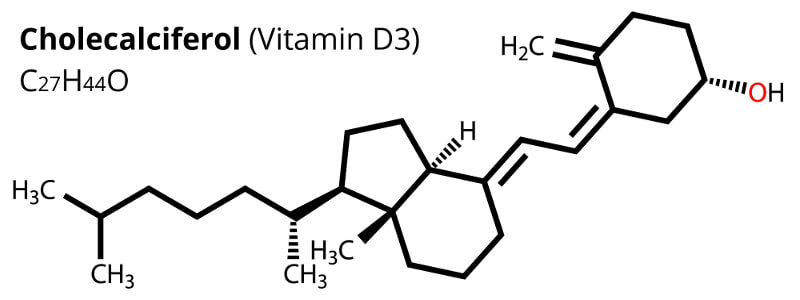
Vitamin D refers to a group of fat-soluble vitamins, the most important representative of which is cholecalciferol — also known as vitamin D3 Strictly speaking, this group consists of prohormones (precursors of hormones) that perform important functions in the body. 

In principle, we do not depend on obtaining vitamin D3 through
our diet. Our body can produce most of what we need itself with the help of sunlight on the skin and can also store it for several months in fatty and muscle tissue and, in small amounts, in the liver. 

In Germany’s latitudes, however, the sun’s UV-B radiation is only sufficient from March to October to stimulate the body’s own production (endogenous synthesis) [1]. Especially toward the end of winter, the stores are often already depleted, which leads to an insufficient supply for most of the population [2].

Vitamin D contributes

  • to the maintenance of normal bones, teeth, and muscle function
  • to the normal function of the immune system
  • to the normal absorption/utilization of calcium and phosphorus
  • to a normal calcium level in the blood
  • and has a role in cell division

How much vitamin D do children need?

The German Nutrition Society (DGE) has published the following estimated values to achieve a sufficient concentration (> 50 ng/ml 25-OH-D) of vitamin D in the blood. Vitamin D is usually stated in international units (IU), with the conversion 1 µg = 40 IU.

Infants (up to 12 months): 10 µg (400 IU)

Children (up to 15 years): 20 µg (800 IU)

Adolescents (from 15 years) 20 µg (800 IU)

Adults: 20 µg (800 IU)

Estimated values for an adequate intake in the absence of the body's own production, as of 03/2024 [3].

According to current studies, most children obtain only a very small proportion of this amount through their daily diet. Especially in winter, when the sun is not strong enough to stimulate the body's own production, the body's stores are sooner or later depleted.

Scientific statistics even suggest that up to 80% of the German population then has insufficient blood concentrations (< 30 ng/ml 25-OH-D), and more than 60% even have blood levels considered indicative of a deficiency (< 20 ng/ml 25-OH-D) [1].

). From a naturopathic perspective, however, these amounts are insufficient when the body's own production is absent. Naturopaths refer to sources that recommend at least 1000 IU per day for children in order to increase the blood concentration to above 30 ng/ml 25-OH-D [4].

Where is vitamin D found?

Since vitamin D is present in sufficient quantities in only very few foods, dietary intake accounts for only about 10% of our daily requirement. Especially in winter, however, we depend on an external supply due to weak sunlight when our stores are running low.

Fish & seafood (per 100 g)

  • Herring – 25 µg
  • Eel – 20 µg
  • Salmon – 16 µg
  • Sardine – 11 µg
  • Oysters – 8 µg


Dairy products, eggs & butter (per 100 g)

  • Processed cheese – 3.1 µg
  • Chicken egg yolk – 5.6 µg
  • Chicken egg – 2.9 µg
  • Butter – up to 2.5 µg
  • Gouda – 1.3 µg


Mushrooms (per 100 g)

  • Morel, porcini, raw – 3.1 µg
  • Chanterelle, raw – 2.1 µg
  • Button mushroom, raw – 1.9 µg

Vitamin D content in various foods [5]

Warning: Plant-based sources contain only the form vitamin D2 (Ergocalciferol), which has significantly lower bioavailability than vitamin D3, meaning it cannot be absorbed and processed by the body as effectively [6].

Since it is practically impossible to meet the entire vitamin D3 requirement through food, especially in winter it is advisable to ensure adequate intake with an appropriate dietary supplement. The German Nutrition Society (DGE) also recommends vitamin D supplements in this case.

Dietary intake from usual foods is not sufficient to reach the estimated value for adequate intake in the absence of endogenous synthesis (note: the body's own production), which ensures the desired level of at least 50 nmol/l. The difference must be covered through endogenous synthesis and/or by taking a vitamin D supplement.

German Nutrition Society [3]

That is why you will also find a total of 1000 IU of vitamin D3 in our Vitamin D3 Gummies.

According to a long-term study of schoolchildren, daily intake of 2000 IU for a period of one year is considered safe [7]. For adults, this amount can even be increased to up to 10000 IU per day [8].

Pflichthinweis: Nahrungsergänzungsmittel sind kein Ersatz für eine ausgewogene und abwechslungsreiche Ernährung und eine gesunde Lebensweise.

Quellenverzeichnis - Vitamin D3 - wowtamins Nutrient Guide

Entdecke unsere Vitamin-Gummies Kategorien